Blog
美味しいそばができるサイン/Signs That Good Soba Is About to Be Made
そばを打っていると、「今日は美味しいそばができそうだ」と感じる瞬間がいくつかあります。 毎回必ず当たるわけではありませんが、長くそば打ちを続けていると、仕上がりを予感させる“小さなサイン”のようなものが、工程のところどころに現れます。 ただ、そのサインにはっきり気づけるようになった工程もあれば、まだ探し当てられずにいる工程もあります。今回は、私が今のところ見つけられているサインと、いまだ見つけられずにいるサインの両方をご紹介したいと思います。
水回しで立ち上る香り
最初のサインは、水回しの途中で訪れます。 そば粉と水がなじみ始めると、鉢の底からふわっとそばの香りが立ち上ってきます。食べるときに感じる香りよりも濃く、まっすぐ心に届くような香りです。この瞬間は、打ち手の気持ちをふっと和ませてくれる、そば打ちの楽しみの一つでもあります。 香りは、そば粉の品種や製粉方法、挽いてからの日数によっても変わります。穀物臭ではなく、「なんとも言えない良い香り」が感じられた日は、自然と期待が高まります。
円錐にまとめるときの手ざわり
次のサインは、生地を円錐形にまとめる「角出し」の工程です。 そば粉と水がまとまり、生地を鉢の側面を使って円錐形に整えていくと、左手のひらに伝わる感触で、生地の状態がおおよそわかります。 底辺のあたりに乾いたようなザラつきを感じるときは、加水や練りがわずかに足りない状態です。この段階ではもう調整できないため、いつも以上に丁寧に扱わなければ、生地にひびが入り、短いそばになりやすくなります。 反対に、手のひらに心地よい滑らかさが伝わってきたときは、「今日は良いそばになりそうだ」と期待が持てます。
盛り付け前にわかる「引き」の強さ
最後のサインは、盛り付けの直前です。 茹でたそばをザルで水切りし、三本の指でひとつまみ持ち上げた瞬間、そばが「ググッ」と力強く引いてくることがあります。 この引きが強ければ、切れずに長く仕上がった証拠です。まるで大魚を釣り上げたような嬉しさがあります。 反対に、スッと軽く持ち上がるときは、麺が短くなっていることが多く、食べたときにも少し物足りなさを感じます。
厚みを均一に延ばす、まだ見えないサイン
ここまでご紹介した三つのサインに対して、今の私が最も難しいと感じているのが、生地を均一な厚みに延ばす工程です。 ここがうまくできれば、さらに美味しいそばになるはずです。けれども残念ながら、香りや手ざわりのような明確な「サイン」を、厚みに関してはまだ見つけられていません。そのため今は、少々手間ではありますが、デジタル厚みゲージで確認しながら延ばしています。 いつか道具に頼らず、自分の感覚だけで均一な厚みに延ばせるようになりたい――そう思いながら、今も練習を続けています。そのときつかめるはずの「新しいサイン」を、楽しみに待っているところです。
While making soba by hand, there are moments when I sense, "today's soba is going to turn out well." It doesn't happen every single time, but after years of making soba, certain small "signs" have emerged that hint at how the noodles will turn out. That said, there are some steps where I've come to recognize these signs clearly, and others where I still haven't managed to find one. This time, I'd like to share both the signs I've found so far, and the one I still haven't.
The Aroma That Rises During Mizumawashi
The first sign appears partway through mizumawashi, the process of mixing water into the buckwheat flour. As the flour and water begin to come together, a soft aroma of soba rises up from the bottom of the bowl. It's richer than the aroma you notice while eating, and it seems to reach the heart directly. This moment gently eases the mind of whoever is making the soba — it's one of the small pleasures of the craft. The aroma changes depending on the variety of buckwheat, the milling method, and how many days have passed since grinding. When what I smell isn't a plain grainy scent but something indescribably good, my expectations naturally rise.
The Feel of the Dough While Shaping the Cone
The next sign comes during Tsunodashi, the step of shaping the dough into a cone. Once the flour and water have come together, I use the side of the bowl to form the dough into a cone shape, and the sensation transmitted to my left palm tells me roughly what state the dough is in. When I feel a dry, slightly rough texture near the base, it means the hydration or kneading was a touch insufficient. Since it's no longer possible to make adjustments at this stage, I have to handle the dough with extra care — otherwise it tends to crack and result in shorter noodles. On the other hand, when a pleasant smoothness comes through my palm, I find myself thinking, "today is going to be a good batch."
The Strength of the "Pull" Just Before Plating
The last sign comes right before plating. After draining the boiled noodles in a colander, the moment I lift a small pinch with three fingers, the soba sometimes pulls back firmly — a strong, springy tug. A strong pull like this is proof that the noodles came out long without breaking. It brings a satisfaction not unlike landing a big fish. On the other hand, when the noodles lift up lightly with almost no resistance, it usually means they've turned out short — and eating them tends to feel a little less satisfying, too.
Rolling the Dough to an Even Thickness: A Sign I Haven't Found Yet
Compared with the three signs above, what I currently find most difficult is rolling the dough out to an even thickness. If I could master this, the soba would surely taste even better. Unfortunately, though, I haven't yet found a clear "sign" for thickness the way I have for aroma or texture. So for now, it takes a bit of extra effort, but I check with a digital thickness gauge as I roll. Someday, I'd like to be able to roll the dough evenly by feel alone, without relying on tools — that's what I keep telling myself as I continue to practice. And I'm looking forward to the day I finally discover that "new sign" for myself.
つなぎ(小麦粉)の選択について
まずは御膳そばです。この蕎麦は、澱粉質の比率が高いそば粉(内層粉)を使用します。生地をつなぐことが非常に難しいため湯練りしますが、小麦粉を一部配合(全体の2割程度)することがあります。その場合、生一本と比較してどうしても色がくすみ、透明感や食感(歯切れの良さ)の面で劣ります。ですから、使用する小麦粉はできるだけ色が白く(灰分が少ない一等粉)、生地を繋げる効果の高い強力粉を選択することになります。灰分が少ないと小麦粉臭さも感じにくくなります。添付資料のつなぎ用小麦粉の品質マトリクスのAの部分になります。
内層粉に中層粉が加わった白いそば粉(製粉歩留まり50%程度のそば粉)を使用したそば(更科蕎麦)はどうでしょうか。粒度の細かいそば粉(細挽き)であれば小麦粉を配合せずに問題なく繋がりますが、求める食感に近づけるために小麦粉をブレンドする場合が多いかと思います。まず、そば粉の色と風味への影響を抑えるため一等粉を選択します。弾力・コシを強くしたい場合は強力粉(マトリクスのA)、粘りがあり滑らかな食感を求める場合は中力粉中力粉(マトリクスのB)を選択します。
江戸蕎麦等石臼挽き全層粉(挽ぐるみ)の細挽きを使用した品のいい八割そばは、中力粉の使用が多いようです。マトリクスのBの部分になります。そばの香りと食感、そして喉越しのバランスが優れているからだと思います。そばの風味を強くするため粗挽き粉を一部ブレンドする場合、強力粉の一等粉や準強力粉(中華麺用粉)を使用すると色への影響がなく生地の繋がりを強くさせる、といった工夫があっていいかと思います。
中層粉から表層粉までの黒いそば粉を使用した田舎そばの場合は、色は黒く臭いが強いため灰分の高い強力粉(準一等粉や二等粉)を使用することがあります(マトリクスのC)。一等粉よりグルテンが多いため生地の繋がりを強くできますし、小麦粉臭さは蕎麦の臭いで分かりにくくなるためです。また、コストも低く抑えることができます。強力粉か中力粉かは、麺の太さや求める麺の食感によって違ってきます。小麦粉の比率は、1割から7割まで選択の幅を広く考えることもできます。
使いたいそば粉や自分が理想とする蕎麦によって、小麦粉の選択や配合率を工夫することも大事なことだと思います。添付のマトリクスをご参照ください。
 つなぎ用粉の品質マトリクス.pdf (0.2MB)
星の王子さま/the Little Prince
物売りは、 のどの渇きをいやすのに、とてもよく効く薬を売っていた。一週間にひと粒 飲めば、もうなにも飲みたいとは思わなくなる。
「どうしてそんなものを売ってるの?」 王子さまは聞いた。
「すばらしく時間が節約できるようになるからだ」物売りが答えた。「専門家が計算したところ、一週間に五十三分の節約ができる」
「それでその五十三分をどうするの?」「好きなことに使うのさ……」
〈ぼくなら〉と王子さまは思った。〈もし五十三分あったら、そっと、ゆっくり泉にむかって歩いていくよ……〉
《出典》サン=テグジュペリ. 星の王子さま(新潮文庫 河野万里子訳)
*以下出典部分は『』で示します。添付の絵も同じ出典です。
80年前に書かれたこの本には時間を節約することにあくせくする大人が風刺されています。そして、現在「タイパ」という言葉が情報社会の先頭に立つZ世代の中で価値あるキーワードとなっていることについて筆者は天国からどう見ているでしょうか。
筆者の描く、節約した時間で何をするかを考えていない大人たちの姿は、今の日本人には必ずしも当てはまらないかもしれません。高度成長から低成長の時代を経て、終身雇用制が揺らぎ、70歳まで収入を確保するための勉強や投資に忙しい世の中です。
それにしましても、そのような毎日を送っていると、あるバランスが崩れ、週末はへとへとで家でぐったりとして過ごす方も多いのではないでしょうか。前向きな方は、趣味や一人旅にいそしんだり、仲の良い仲間と楽しい時間を過ごしているでしょう。しかし、精神的にバランスをとるのは簡単ではないような気がします。
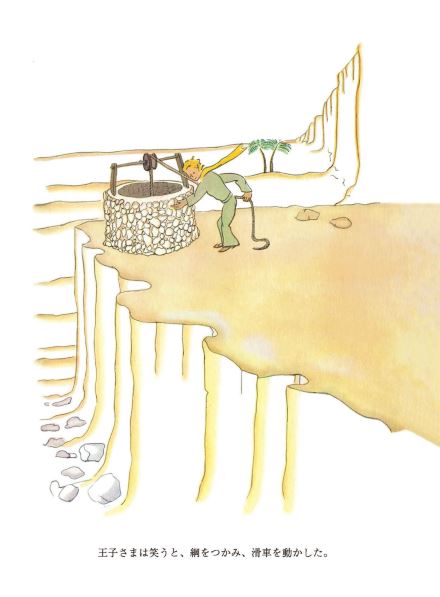
『僕の飛行機が砂漠に不時着して、ちょうど一週間目のこと(略)。持っていた水の最後の一滴を飲みほしていた』僕は、王子様とあてもなく井戸を探します。僕は、王子さまを抱えながら一晩中歩き続け夜明けに井戸を発見します。
その水は、『星空の下を歩き、滑車の歌を聞き、僕が力仕事をして得た水だ。だからこそ、それは贈り物にも似た、心にいい水』なのだと王子さまは言います。
やることが見当たらず悶々としている方はぜひ、手打ちそばを体験してみませんか。
『心にもおいしい水』を一緒に味わいましょう。リフレッシュできますよ。
A peddler sold a medicine that was very effective at quenching thirst. If you took one pill a week, you would no longer feel the need to drink anything else.
"Why do you sell such a thing?" the Little Prince asked.
"It's because it allows for marvelous time savings," the peddler replied. "Experts have calculated that you can save fifty-three minutes a week."
"And what do you do with those fifty-three minutes?" "I use them for whatever I like..."
"I would use them to..." thought the Little Prince. "If I had fifty-three minutes, I would quietly walk towards the fountain."
[Source: Antoine de Saint-Exupéry, "The Little Prince" (Translation by Mariko Kawano, Shincho Bunko)]
*The following source portions are indicated by ' ' marks. The attached illustrations are from the same source.
Written 80 years ago, this book satirizes adults who toil to save time. The author wonders how this resonates with today's Japanese society, where the word "ti-pa"(time performance) has become a valuable keyword among the leading Generation Z in the information protection society.
The depiction of adults who don't necessarily think about what to do with the time they save may not necessarily apply to today's Japanese people. After going through the era of high growth, the era of low growth, and the uncertainty of lifelong employment, society is busy with studying and investing to secure income until the age of 70.
Even so, living such a daily life, there is a balance that may be disturbed, and many people may spend their weekends exhausted and collapsed at home. Positive individuals engage in hobbies or solo trips, spending enjoyable times with close friends. However, maintaining a balance mentally doesn't seem easy.
"My plane crashed in the desert, exactly a week ago (omitted). I had drunk the last drop of water I had." I search for a well with the Little Prince without a specific destination. Holding the Little Prince, I walk all night and discover a well at dawn.
The water is "walked under the starry sky, listened to the pulley's song, and the water I obtained through hard work." That's why it is water that is similar to a gift, good for the heart, says the Little Prince.
If you are feeling lost with nothing to do, why not try making handmade soba noodles?
Let's savor the "water that is good for the heart" together. It can be refreshing.